SEB Marketing Team
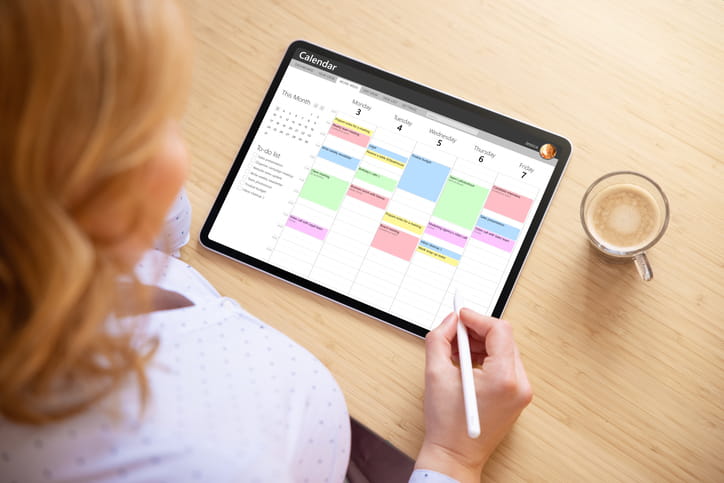
Look at your calendar for this week. If it resembles a solid wall of overlapping colour blocks, you aren’t alone.
For most knowledge workers, the modern workday is defined by the endless cycle of joining, speaking on, and leaving live video calls. Somewhere along the line, we confused being present on camera with getting actual work done.
The result? Teams are exhausted, deep work is relegated to after-hours, and real organizational progress crawls along at a snail’s pace.
It is time to dismantle the habit of default meetings and build an asynchronous-first workplace that respects attention, accelerates decision-making, and restores real productivity.
The Core Confusion: Collaboration vs. Meetings
Meetings are not collaboration. They are simply one specific, highly expensive medium through which collaboration can happen.
When an organization defaults to live calls for every update, question, or brainstorming session, collaboration becomes performative. True collaboration occurs when individuals have the space to digest information, reflect deeply, and contribute thoughtful input.
When you force all collaboration into real-time, 30-minute windows, you don’t get your team’s best ideas. You get the quickest ideas from the loudest voices in the room.
The Hidden “Fragmentation Tax” Destroying Productivity
The damage of a meeting-heavy culture isn’t just the hours spent sitting in calls. The real cost lies in what happens between them: context-switching.
When a worker’s schedule is chopped into 30- and 60-minute increments, they pay a steep “fragmentation tax.”
- Focus takes time: It requires roughly 20 to 23 minutes to regain deep focus after a single interruption.
- Shallow work wins: Knowing a call is coming up in 45 minutes deters people from starting complex, high-value tasks. Instead, they default to low-effort tasks like clearing inboxes.
- Velocity drags: Waiting three days to align five schedules for a simple 15-minute decision stalls project momentum completely.
Flip the Default: Move to Asynchronous-First Workflows
To break the cycle, team leads must flip the default setting. Instead of asking “When can we meet to talk about this?”, ask “How can I share this so the team can review it on their own time?”
Here is how to make the shift:
- Document Before You Discuss
Never host a meeting to deliver information linearly. Write a clean, structured document or post an update in your team’s digital workspace. Give people time to read, comment, and digest the material before deciding if a live discussion is even necessary.
- Embrace Recorded Walkthroughs
If text doesn’t capture the nuance, record a short, 3-minute video or screen recording. A quick visual walkthrough gives colleagues the full context with human tone—without forcing five people to pause their workflow simultaneously.
- Normalize Asynchronous Decision-Making
Set clear deadlines for feedback (e.g., “Please review this deck and leave comments by Thursday at 2 PM”). This moves projects forward continuously rather than halting progress until the next available calendar slot.
Reserve Synchronous Time as a Premium Resource
Eliminating unnecessary meetings doesn’t mean eliminating live human connection. It means elevating live time into something valuable.
Live, synchronous time should be treated as a scarce, high-cost investment. Reserve it exclusively for three scenarios:
- Complex Debates: Resolving deep strategic disagreements where back-and-forth text becomes inefficient.
- Consensus Building: Finalizing high-stakes decisions that require immediate, multi-stakeholder alignment.
- Human Connection & Emotional Alignment: 1-on-1 coaching, team bonding, or navigating sensitive personnel matters.
If a meeting doesn’t fit into one of these three buckets, cancel it and move it to a shared doc.
Take the First Step Today
A meeting-light culture doesn’t happen overnight, but the competitive advantage is immediate: higher retention, faster execution, and better strategic output from a team that actually has time to think.
You don’t need a corporate overhaul to start.
Look at your calendar right now. Pick one recurring update call or status meeting scheduled for this week, cancel it, and replace it with a brief asynchronous document update.
Notice how much faster the work gets done—and how much relief your team feels when they get those 30 minutes back.